Best Dog Winter & Seasonal Vests 2026: 4 Picks That Solve the “Cold Walk” Problem
Affiliate disclosure: This post contains affiliate links. If you buy through them, we may earn a small commission at no extra cost to you. Our picks are based on product specifications, category fit, and the real pain points pet owners report — not on commission rates.
Most dog clothes fail for one of three reasons: they don’t stay on, they don’t actually keep the dog warm, or they make every walk a wrestling match. The four vests below take different approaches to the same problem, and each one earns its place for a specific kind of dog and a specific kind of weather. Here’s how they compare.
Quick Picks
| Best for | Product | Standout feature | Sizing range |
|---|---|---|---|
| Best for bitter cold | Graphene Down Four-Leg Snowsuit | Graphene heat-retention + 90% white duck down | XS–XXL (approx. 1–20 lbs) |
| Best everyday fleece | Embroidered Fleece Vest with Built-in Leash Clip | Leash clip sewn into the back — no separate harness | Small breeds, chest-focused fit |
| Best transitional layer | Navy-Collar Striped Spring Vest | Lightweight, collar detail, easy on/off | Small to medium |
| Best mild-weather basic | Cartoon-Print Lightweight Vest | Soft polyester, playful print, low bulk | Small breeds |
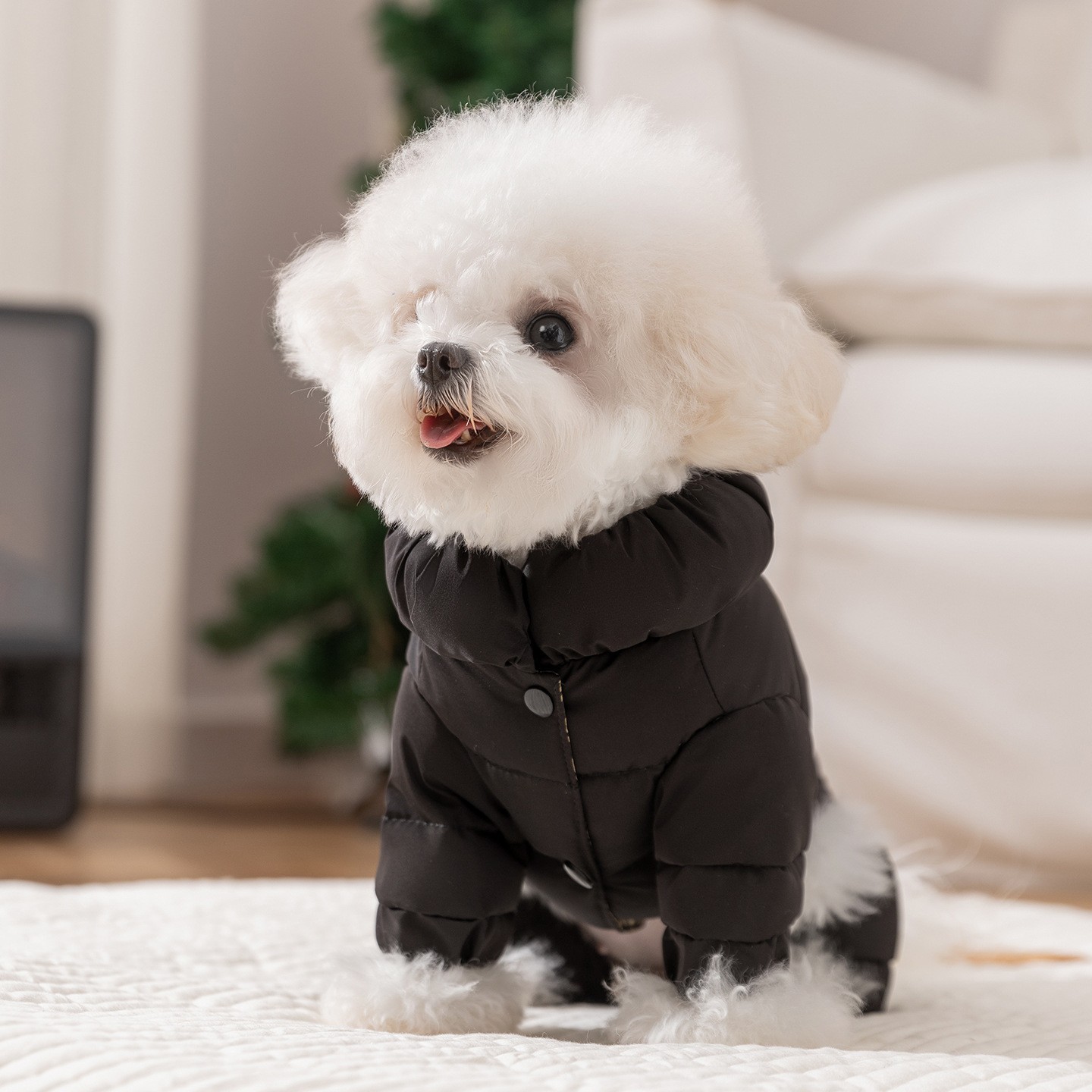
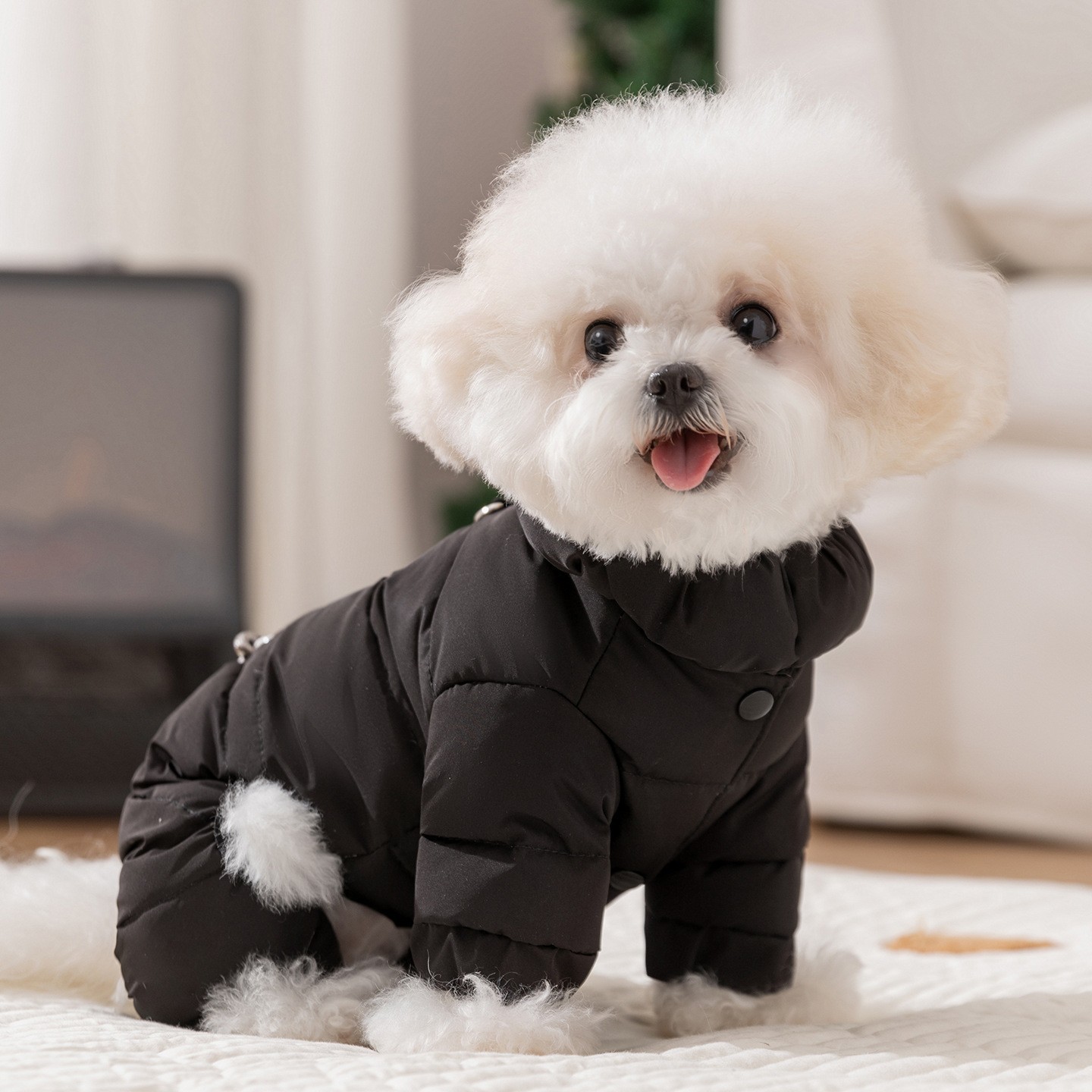
1. Graphene Down Four-Leg Snowsuit — Best for Bitter Cold
The four-leg cut is the other major selling point. It covers the chest, belly, and upper legs — the areas most exposed to wind and snow — and the back leash port means it can be worn over a harness without fighting through layers. If your dog hates the cold and shivers on every pee break, this is the one to try first.
Pros
- Graphene heat-reflection + down fill for genuine cold-weather performance
- Four-leg coverage protects the belly and upper legs
- Leash port compatible with most back-clip harnesses
- Wide size run from XS to XXL, with weight guidance on the listing
Cons
- More coverage means a slightly longer dressing routine than a simple vest
- Best suited to small and medium dogs; giant breeds will need to size up carefully
- The “big fur collar” styles are visibly bulky — great for warmth, less ideal for muddy trail runs
Who it’s for: Small-breed owners in cold-winter climates, dogs with short or thin coats, and anyone whose current “winter coat” is really just a fashion layer.
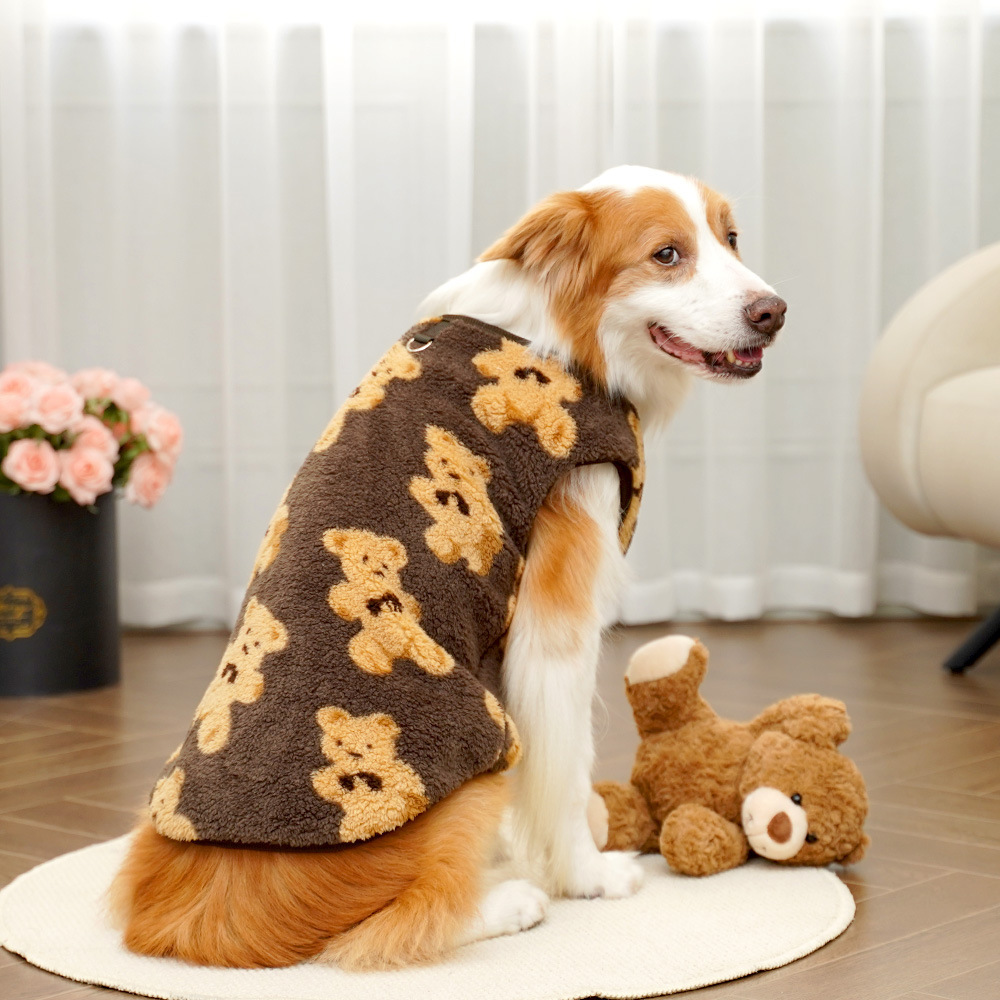
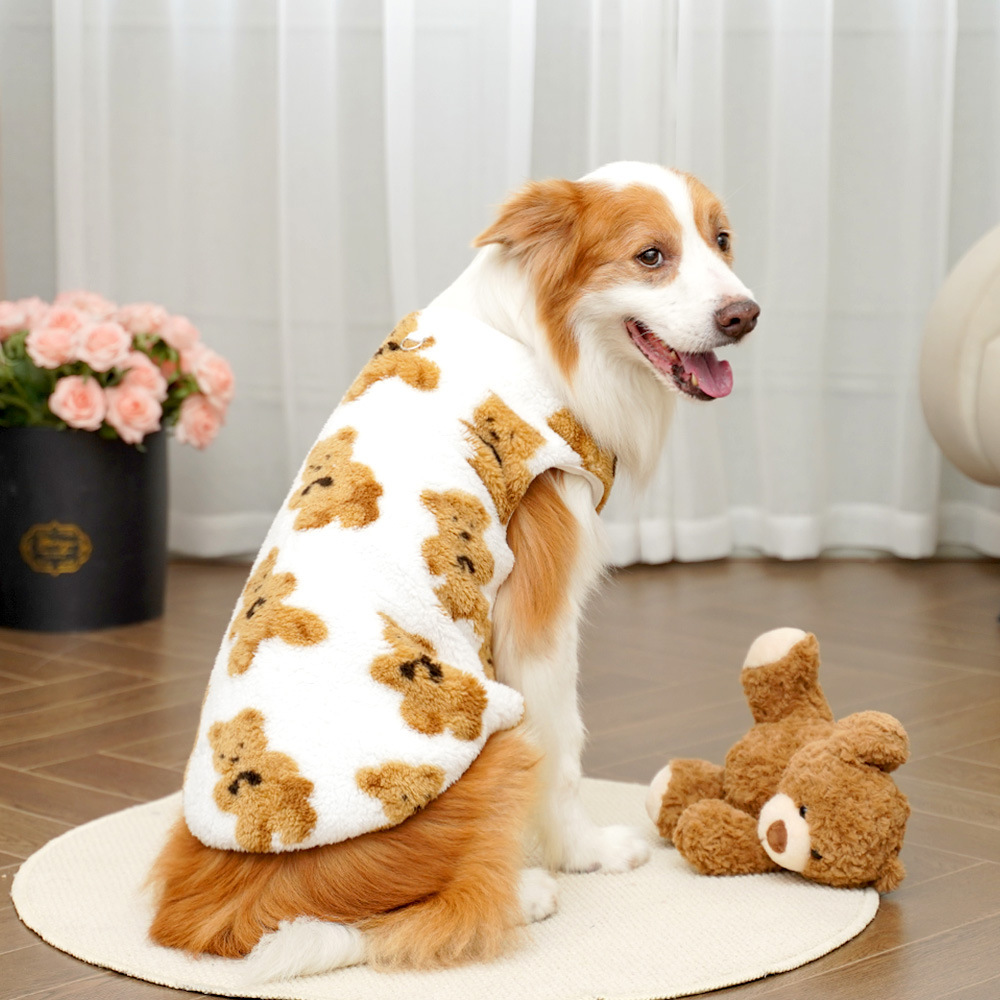
2. Embroidered Fleece Vest with Built-in Leash Clip — Best Everyday Fleece


The thick fleece backing gives it real warmth for fall and mild winter days, and the three-dimensional embroidered dog motif adds a bit of personality without turning the dog into a walking billboard. The polyester shell is easy to wipe down, and the vest cut keeps the range of motion open for small dogs that already have short legs and low ground clearance.
Pros
- Built-in leash clip eliminates the harness-under-coat hassle
- Thick fleece lining for fall and mild-winter walks
- Embroidered design is cute without being fragile or scratchy
- Vest cut is easy to put on and take off
Cons
- Not a replacement for a four-leg snowsuit in freezing rain or heavy snow
- Built-in clip is best for calm walkers; strong pullers may still need a harness
- Sizing is chest-focused, so measure the widest part of the ribcage
Who it’s for: Everyday walkers, senior dogs who don’t need full-body coverage, and owners who want one piece that does the job of both a fleece and a light harness.
3. Navy-Collar Striped Spring Vest — Best Transitional Layer


The appeal here is versatility. It layers under a heavier coat on the coldest days, works alone on mild days, and photographs well without looking like a costume. For owners who want their dog to look “dressed” rather than “equipped,” this is the pick.
Pros
- Lightweight enough for spring/fall temperature swings
- Classic striped + collar design works for everyday wear and photos
- Easy to layer under a heavier coat
- Low bulk, so it doesn’t interfere with walking or play
Cons
- Not designed for freezing temperatures
- Less belly coverage than a four-leg suit
- Style-first pick — warmth is moderate, not extreme
Who it’s for: Mild-climate owners, transitional-season walkers, and anyone who wants a “nice outfit” vest rather than a technical jacket.
4. Cartoon-Print Lightweight Vest — Best Mild-Weather Basic
It won’t keep a short-haired dog warm in a snowstorm, and it isn’t built for heavy pullers. But as a low-cost, low-commitment way to test whether your dog will tolerate clothing — or as a cute layer for photos and mild days — it does exactly what it needs to do.
Pros
- Very lightweight and low-bulk
- Soft polyester is gentle on sensitive skin
- Playful print adds visibility and personality
- Low price point makes it an easy trial piece
Cons
- Minimal warmth — mild weather only
- Not built for extreme cold or wet conditions
- Best for small breeds; larger dogs may need a different cut
Who it’s for: First-time dog-clothing buyers, mild-climate owners, and dogs that need a “starter vest” before committing to a heavier coat.
Buying Guide: What Actually Matters for Dog Vests
1. Match the coverage to the weather, not the marketing
A four-leg down suit and a lightweight print vest are not interchangeable. For freezing temperatures, wind, and snow, look for full-body or four-leg coverage and an insulating layer — down, fleece, or a heat-reflective lining like graphene. For cool-but-not-cold days, a vest cut with a fleece backing is enough. Buying a “winter coat” that’s really a fashion vest is the most common cold-weather mistake.
2. Measure the chest, not the back
Dog clothing sizes vary wildly between brands, and back length alone is a poor guide. Measure the widest part of the chest (girth), the neck, and the back length from collar to tail base, then compare all three to the size chart. If your dog is between sizes, size up — especially for fleece and down, which have less stretch than knit fabrics.
3. Decide whether you want a built-in leash attachment
A leash clip or leash port changes the daily routine. If you’re doing quick walks in cold weather, a built-in clip or a back leash port saves you from layering a harness under a coat every time. If your dog pulls hard or needs a front-clip harness for training, choose a coat with a leash port rather than a built-in clip, so you can wear your own harness underneath.
4. Consider the dressing routine
Dogs that hate clothing usually hate the putting-on process more than the garment itself. Vests with a simple back closure or a wide neck opening are easier to slide over the head than four-leg suits with multiple fasteners. If your dog is a wriggler, start with a vest cut before moving to a full snowsuit.
FAQ
Will a graphene dog coat actually feel warm, or is it marketing?
Graphene’s function in a coat is to reflect the dog’s infrared body heat back toward the body rather than letting it escape, which is different from a standard cotton or fleece layer that mostly traps air. It’s not a powered heater, but for short-haired or cold-sensitive dogs, the difference is noticeable on long walks.
My dog hates clothes. Which of these is the easiest starter?
Start with the lightweight cartoon-print vest or the striped spring vest. They have the least bulk and the simplest on/off process, so you can build tolerance before introducing a four-leg snowsuit.
Can I use a harness with these vests?
The embroidered fleece vest has a built-in leash clip, which replaces a harness for calm walkers. The graphene snowsuit has a back leash port that fits over most back-clip harnesses. The lightweight vests are best used with a harness worn underneath or a clip-on leash directly to a collar for calm dogs.
How do I wash a down or graphene dog coat?
Check the care label first. In general, down and graphene-lined coats should be washed on a gentle cycle with a down-specific detergent, then air-dried flat and fluffed occasionally to restore loft. Avoid high heat, which can damage the reflective lining and the down clusters.
Prices and availability change. Always confirm the current size chart and shipping details on the product page before ordering.